You won't believe the night I had.
I mean I don't believe the night I had.
After day drinking on the poetry of Frost and Kipling and Kamala Das and some beer and some whiskey - I was anyway in that hazy zone where you're not sure if you're half asleep, half awake, def a bit drunk with some leftover thoughts.
This is when my phone buzzed, and the screen showed "Private Number." Just out of curiosity, because who gets a mystery call on their personal phone at that hour at 1 A.M, I answered.
A voice on the other end, sharp and a little amused, said, "So, this is The Gutter Poet, huh?"
Then a chuckle. Cracked, like the caller found the whole thing hilarious. My stomach tightened.
Nobody called me that. Nobody should know to call me that.
Then: "Well, you're invited to a very special birthday party. Come to Church Street, and you'll find it. When you see it, you'll know."
The line clicked off and the room held its breath. I was high enough to feel floaty, half asleep enough to doubt my own ears, and still the name rattled like a coin in a glass.
Curiosity knocked hard, the old reckless guy I keep buried kicking at the lid. For a second I saw myself inside a Murakami chapter: stairwells that go nowhere, a phone that knows too much. I looked at the new leather jacket I'd bought. Loud, unnecessary, screaming forty-year-old trying to hold onto his madness. And the keys to the new bike beside it.
Fine. If I was fermenting in my own overthinking, hiding behind pseudo-intellectual poetry and stale bravado, maybe it was time to crack the jar. I put on the jacket, pocketed the keys, and stepped into the night, because staying still felt like a worse kind of fiction.
Church Street was still littered with Independence Day's leftovers. Tricolor flags drooped from shopfronts, already streaked with grease and smoke.
For two days in a year, everyone suddenly remembered they were patriots. Until the hangovers kicked in and the flags turned to litter.
Bangalore's real celebration wasn't freedom, anyway. It was the fact that Independence Day wasn't a Dry Day like it was for most of India. And they made the most of it.
And yes, I caught myself narrating this like some artsy essayist, leaning into single-serve social critique, the kind of thing I'd normally type into Notes at 2 a.m. and never look at again. Typical. Give me a street corner and I'll try to become Naipaul.
Church Street at night was the usual mess. Kebab smoke curling into shirts, stale beer breath spilling from doorways, neon trying too hard to matter. College kids half-screaming Coldplay choruses into the street, a DJ hammering bass from a basement bar. Horns, laughter, broken glass somewhere. All of it alive, too alive, and yet I moved through it like a ghost. Sealed off, detached, following only the echo of that voice.
That's when it tilted.
Koshy's. The grand old diner of Bangalore, shutters down, the street around it thinning out. I knew Koshy's like I knew the lines on my own hand: gazillion beer lunches, late night snack post drinks and more, hangovers nursed over eggs and toast.
But this was different.
A side door I'd never noticed stood ajar. A faint breath of warm air slipped through, carrying the unmistakable mix. Whisky, cigarettes, and, absurdly, jasmine.
I froze. Koshy's didn't have a basement. Not one anyone ever spoke about. But the door was waiting, dark and certain.
And just like that, I felt the shift: this wasn't the city anymore. This was the book I'd stepped into.
I pushed the side door open. A staircase sloped down, narrow, uneven, the kind of stairs that seemed to multiply the deeper you went. The air thickened with each step. Not just smoke and whisky now, but the damp of old wood, and something I couldn't place but that smelt of magic.
A single tube light flickered overhead, buzzing like a mosquito. Halfway down I thought about turning back. About how ridiculous it was, a grown man chasing a midnight prank call into a basement that shouldn't exist.
But the voice in my head, the reckless one, muttered: You came here for a reason, don't pretend otherwise.
At the bottom hung a red velvet curtain, heavy and frayed, like it had been stolen from some third-rate theatre. I pulled it aside.
The bar revealed itself in fragments, as if the room didn't want to be seen all at once. A church pew shoved against one wall, its varnish long peeled. Beside it, a cracked plastic chair from a local darshini. A velvet sofa with springs poking out like broken ribs. None of it matched, yet somehow it belonged. As if every Bangalore night I'd ever stumbled through had been stripped for parts and rebuilt here.
A jukebox glowed in the corner, but instead of playing, it held one note. A single guitar chord. Forever on the edge of breaking. It pulsed in the air like a heartbeat you couldn't ignore.
The people were worse. A man hunched over a ledger, muttering numbers that didn't add up, the kind of accountant who never left office hours. A woman with kohl eyes smoked each drag with surgical timing, as if the cigarette itself were a stopwatch. Others drifted through the haze. Laughing too loud, spilling stories halfway, then vanishing mid-sentence, like the room itself had swallowed them.
Their faces tugged at me: strangers who looked like people I almost knew.
The air was dense, half-comic, half-menacing. I stood there, balanced between wanting to laugh and wanting to run.
And then I froze.
At the far end, hunched on a stool, chewing a toothpick like it owed him money, was Charles fucking Bukowski.
Alive. Unmoved. As if death had been just another gig he'd skipped. He looked straight through me and raised his glass, slow, unimpressed, like he'd been waiting only to say: You took your time.
I opened my mouth, then shut it again. What do you even say to a (dead) legend in a Bangalore basement? Big fan? Loved your work? I named my little writing page 'The Gutter Poet' in your honour? It all sounded needy and pathetic.
He smirked, or maybe it was just the twitch of a man unimpressed by life and unimpressed by death. "Don't look at me like I'm a goddamn miracle," he said. "It's just a bar. Bars don't care about death." As if reading my mind, or at least glancing through it.
The people around him barely noticed. The woman with kohl eyes blew a ribbon of smoke that curled perfectly between us, like punctuation. The accountant kept muttering numbers that refused to add up.
I finally croaked, "You're not—"
"Dead?" He spat the toothpick into an ashtray. "Sure I am. But people drag me out all the time. Every other MF pseudo writer with a bottle of Rum resurrects me for a night. You're no different."
The jukebox hummed its stuck guitar chord louder, as if agreeing.
I wanted to laugh. I wanted to run. Instead I said, "So what the hell is this? A séance in Koshy's basement?"
Bukowski grinned, yellow and wolfish. "No, kid. This is my birthday party. And you're late."
Shock, reverence, paralysis. What do you even say to someone whose shadow shaped your idea of writing. And who's also been dead 30 years?
I sat down but did not speak.
A drink slid across the table before I could think. I hadn't ordered it. Amber, sweating glass, waiting like it had always been mine.
He watched me not-drink it, smirked. "Don't work so hard, kid. You're cooking your brain trying to think of something devastatingly smart and profound to say. Forget it. I can read the chaos in your silence better than any line you'd choke out."
The jukebox buzzed its one eternal chord, vibrating the table.
"Relax," he said. "Let's just exist in the flow for a while. You ask, I answer. Or I don't. Doesn't matter. Words come, words go. That's all writing ever was. A conversation with nobody in particular."
I took a sip. It burned like recognition.
I cleared my throat, uselessly. "You know," I almost laughed. "Any time someone asks that stupid hypothetical. If you could drink with anyone, alive or dead. I've always said you."
He snorted, flicked ash. "And now you don't know what the fuck to do with me."
"Yeah," I said. "Exactly. I mean, I could ask you the polite shit. Craft. Discipline. What's the secret. But that's not it."
I looked down at the drink I hadn't touched. The glass sweated against my palm. "What I really want to know is… what does it cost? To write like you did. To tell the truth so hard it hurts. What does it take out of you?"
The room stilled. Even the accountant stopped scratching numbers.
Bukowski chewed his toothpick, unimpressed. "Everything," he said finally. "It costs everything. That's the only way it works. If it doesn't kill something in you, it's just decoration." He leaned in, grinning. "And people love decoration. They call it relatable. They post it on Instagram with a sunset. Truth, they hide from. Too sharp."
The woman with kohl eyes leaned forward, smoke curling from her lips. "The world's softer now. They'd cancel you before your second poem."
He barked a laugh, dry as the air. "Cancel me? Kid, they already did. That's what dying is." He looked back at me. "Don't worry about woke, cancel, all that modern crap. Worry about whether your words come out alive or embalmed. That's the only line that matters."
I leaned back, smirked harder than I felt. "Christ, Buk. What is this, a podcast? You're dropping process tips like you've got sponsors waiting outside."
The bar chuckled. Even the woman with kohl eyes cracked a smile. For a flicker, I thought I'd landed something.
Bukowski barked out a laugh that shook the table. Then he leaned forward, pointing his glass at me. "See? That's your rot, kid. Even in a basement with a dead man, you gotta be clever. You'd rather sound funny than sound true. That ain't writing. That's fear with a punchline."
I opened my mouth to fire back. But the accountant looked up from his ledger, adjusted his glasses, and muttered flatly: "Doesn't add up."
The bar roared. Bukowski slapped the table so hard his drink splashed, wheezing with laughter. "Goddamn bean-counter just wrote your epitaph!"
I tried to laugh with them, but heat climbed up my neck. My grin felt painted on.
Then the laughter thinned. Silence pressed in. Bukowski studied me like I was a page he'd read a hundred times. His grin softened into something sharper.
"There it is," he said quietly. "That pause. That's you without the punchline. That's the kid I came down here for."
The jukebox clicked, buzzed, and fell back into its endless stuck note.
"You scatter yourself everywhere," he went on. "Corporate Slave, poet, philosopher, midlife biker, lover, typer. You want to be ten men, so you end up nowhere. That's why you look so damn tired."
The woman with kohl eyes exhaled smoke through a smile. "He's right."
I shifted in my chair. "That's not—"
He cut me off with a wave. "And softness. You call it weakness. Truth? You just don't trust anyone to hold you when you're soft. So you put on the leather jacket, spit clever lines, make sure no one sees you bleed."
The accountant scribbled again, shook his head, muttered: "Depreciating asset."
Bukowski grinned, raised his glass. "Even he gets it."
Something inside me buckled. The grin stayed fixed on my face, but the heat crawled up my neck, into my jaw, into my fists.
I forced out a laugh. Too loud. Too brittle. "Alright, enough," I said. "I'm not some clown in a jacket trying to be a poet."
Bukowski tilted his head, chewing his toothpick. "Clown's closer than poet. At least clowns bleed on stage."
The room stilled.
I felt my throat close, the words choking me. My palms were damp, my heart hammering. I tried to come back with something sharp, something clean. But nothing landed.
Then he leaned forward, voice low, intimate. "Look at you. Clean hands. Soft. No blood in 'em. You don't smell like ink, kid. You smell like perfume."
That line hit like a slap. The laughter returned in little snickers around the room.
Before I knew it, I was standing. Glass in hand.
I was already on my feet before I realized it. The glass tipped sideways, splashing whisky across the table and into his lap.
Bukowski shot up, swearing, swiping at his shirt. The room howled at the sight, half-cheering, half-jeering.
I shoved him. A clumsy, desperate push. He shoved back, not much, just enough to send me stumbling into the jukebox.
The damn thing sputtered awake, blinked once, and shrieked three tinny bars of Dancing Queen into the smoke.
That did it. The bar lost its mind. The accountant clapped once, flat as a judge's gavel. Someone yelled, "Free Bird!"
I swung wide, meaning to connect with his chest, but missed completely. My hand only caught his toothpick, snapping it in half.
For a moment, silence.
Then Bukowski bent double, laughing so hard he wheezed, his shirt still wet with whisky. "That's it, kid? That's your rebellion? A spilled drink and a broken toothpick?"
The laughter crashed back in, rolling over me. My face burned.
I turned and walked out, the sound chasing me into the hallway.
The hallway smelled of mildew and burnt wires. Broken chairs leaned against the wall like drunks. Posters peeled off the plaster. Plays no one remembered, faces half-torn.
I leaned against the wall, chest tight, still hearing the bar's laughter echo behind me.
Footsteps. Then she was there. The woman with kohl eyes. She lit two cigarettes, handed me one, and exhaled like she'd been waiting for this.
"You looked good in there," she said, smirking. "For a minute I thought you'd actually hit him."
"Funny," I muttered, dragging on the cigarette. The smoke burned. "I wasn't trying to be a clown."
"That's the problem." She tilted her head, studied me through the haze. "You're too worried about what you're trying to be."
I shook my head. "You sound just like him."
She laughed. "No, he thinks you're a fraud. I think you're worse. You're begging."
"Begging?"
"You came here for a blessing," she said. "And you'll probably waste it. Like most men do."
The words hit harder than his insults because she didn't even mean them as an insult. Just a statement.
I tried to snap back. Something clever, something sharp. But she waved her cigarette in the air like punctuation. "Don't. You'll only prove me right."
We smoked in silence. The hum of the jukebox seeped through the wall, one endless note that wouldn't die.
The curtain fell back and the room turned, all at once. Not subtle. The laughter, the smoke, even the stuck note from the jukebox seemed to bend toward me.
I stood there a second too long. Long enough to feel the weight of their stares, long enough to know I was already back on trial.
Bukowski didn't move. He was still hunched, shirt stained, toothpick gnawed to pulp. But the drink in front of him was fresh, full, waiting. He tapped it once, twice, like a judge summoning silence.
"You storm out, smoke your cigarette, think you've had your revelation…" His voice was calm, almost gentle. "Then you come crawling back for more. You're a dog with two masters: shame and applause. That's your real curse."
The bar hummed with low laughter. The accountant closed his ledger, as if the math was already done.
I wanted to fire back, to spit something sharp, but the words jammed in my throat. My silence was louder than anything I could have said.
Bukowski's grin widened. "There. That pause again. It's the only honest thing you've done all night." He leaned forward, voice dropping into gravel.
"You're good. But you're scared of being ordinary. So you chase polish, cleverness, applause. Cut the shit. Be ordinary and true, and you'll be great. Keep trying to be extraordinary, and you'll be nothing."
He shoved the untouched drink across the table, slow, the wet trail behind it glinting like a scar.
"Blow out your candle, kid," he said. "Make a wish you'll regret."
Bukowski leaned back after pushing the drink at me, watching it bleed its wet scar across the table. For a long moment, he didn't move. The bar didn't either. Even the jukebox seemed to hold its breath.
Then he slapped the table. "Alright. Enough truth. It's my goddamn birthday."
He stood, slow, swaying. "Music!"
The jukebox screeched, stuttered, and without warning broke into Happy Birthday. Warped, tinny, looping.
The whole room howled. Glasses slammed against tables. The accountant bellowed the song like a hymn. The kohl-eyed woman leaned back, cigarette balanced between her fingers, and actually sang in perfect tune, which somehow made it worse.
Bukowski climbed onto the table, drink in one hand, arms out like a prophet. "Sing, you bastards!"
And they did. But not for him.
They sang it to me.
Voices turned, swelled, slurred my name into the song until the whole room was chanting it. My name bouncing off the walls, off the smoke, louder and louder. The chant shook through me, a drunken chorus crowning me as if I'd stepped into the wrong ritual.
Bukowski raised his glass toward me, eyes burning. "There's your applause, kid. You wanted extraordinary? Take it!"
The chant pounded. My chest went hollow. For a heartbeat it felt like the night itself was shifting around me. Like I was the one being celebrated, cursed, resurrected.
Then the lights cut.
Darkness. The chant ripped off mid-word.
When the lights snapped back on, the bar was empty. No Bukowski. No accountant. No woman with kohl eyes. Chairs overturned, lipstick on glasses, smoke still hanging, but no voices, no bodies.
On the table in front of me lay half a toothpick, damp from his teeth. My hand closed around it before I thought.
I climbed the stairs. The red velvet curtain brushed my face, damp and perfumed. The grate clanged shut behind me.
Church Street was unchanged: flags drooping, kebab smoke thick, drunk kids howling Coldplay into the dark.
But my phone said 6:45 a.m. The sky said midnight.
I looked at my palms. Jasmine petals clung there, bruised into the skin. No matter how hard I brushed, they didn't come loose.
Just then. My phone buzzed.
A single text message:
'Don't try.'
Happy 105th Charlie. Hope this finds you somehow.
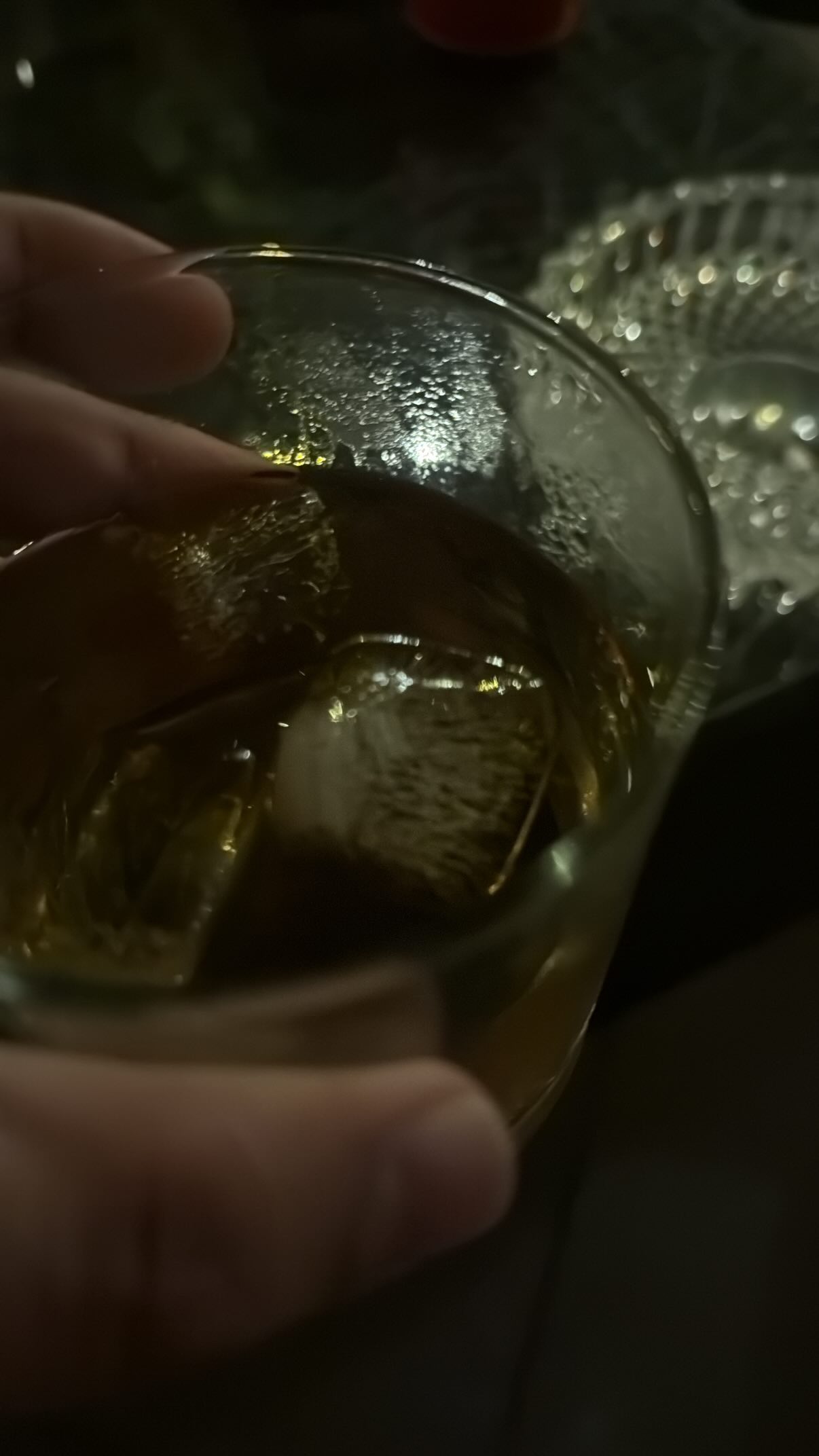
🥃❤️