I have this habit of finding places at the ends of bell curves. Not the famous ones, not the ones anyone recommends. The ones you hear about sideways. Someone mentions a name, or you find a review that reads like it was written by someone who'd just had a religious experience, and you think: I need to see this for myself.
Robot Speak was like that. A synthesizer and drum machine shop on Haight Street in San Francisco. One of the best in the country, allegedly. Half-subterranean, at 589 and a half. The half should have told me something.
I went the first day. Closed. Went back the next morning with a friend, walked down the steps, and before I could see anything, I heard it. A rhythm. Low, pulsing, somewhere between an om chant and the opening bars of something you'd hear at 2am in a Berlin basement. Electronic but warm. Analog warm.
The guy making it hadn't even swept the sidewalk yet.
“I just opened up,” he said, not looking up from the machine. “Haven't swept outside. But I wanted to start playing first.”
That's how the visit started. I'm still not sure how to file it.
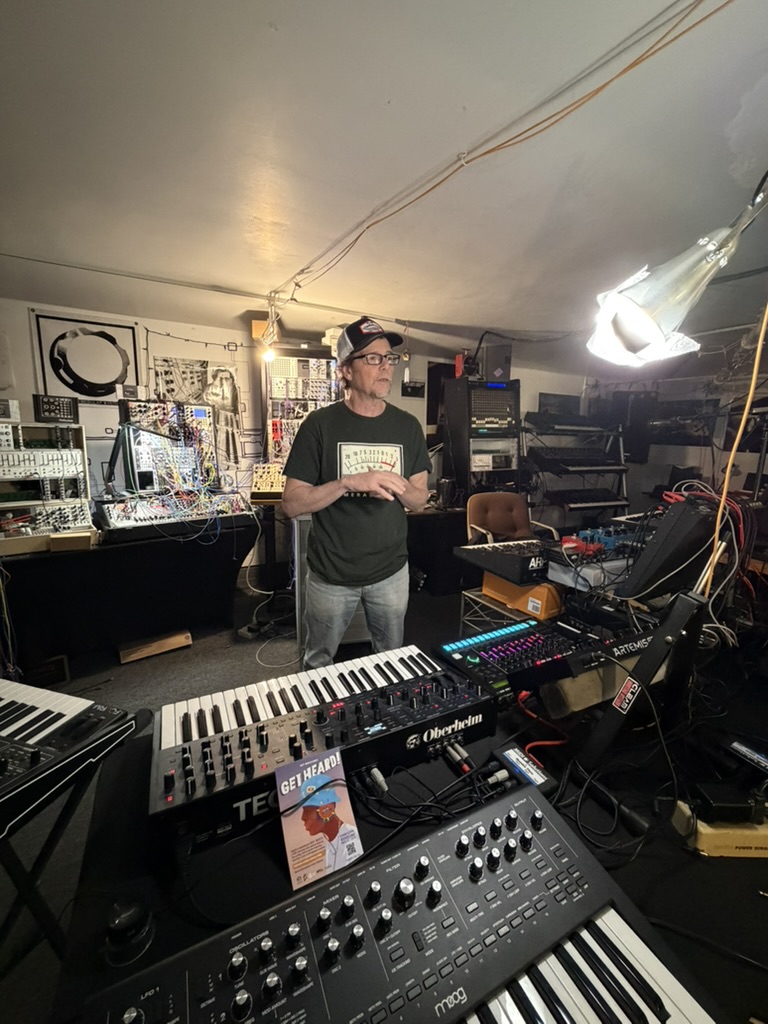
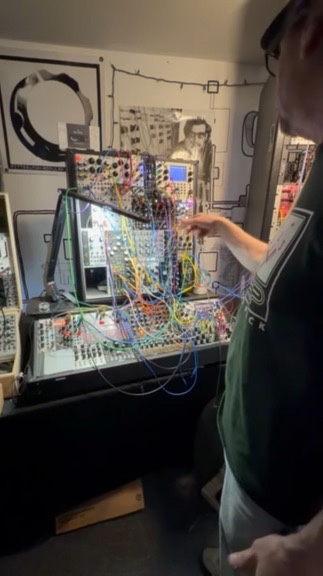
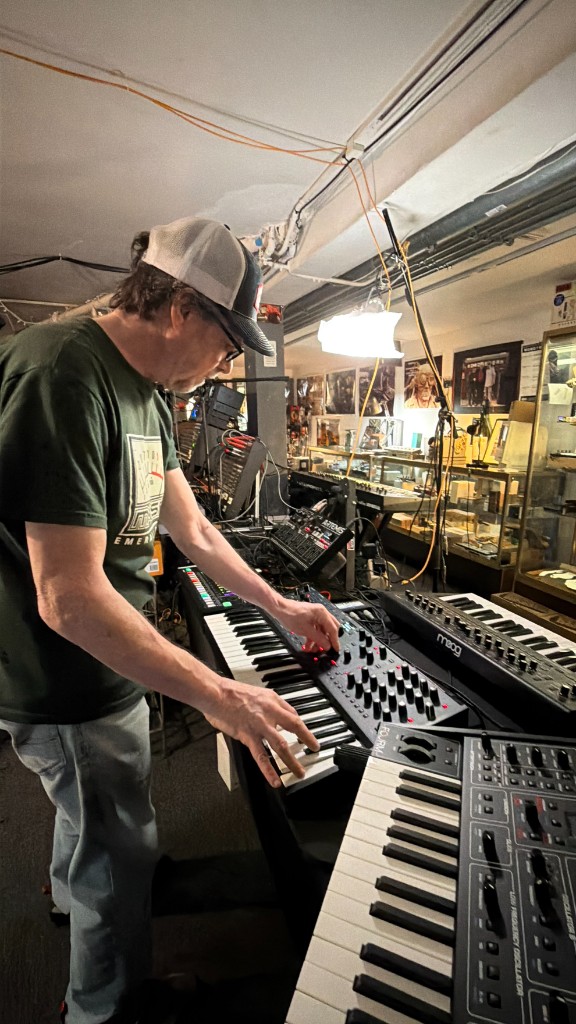
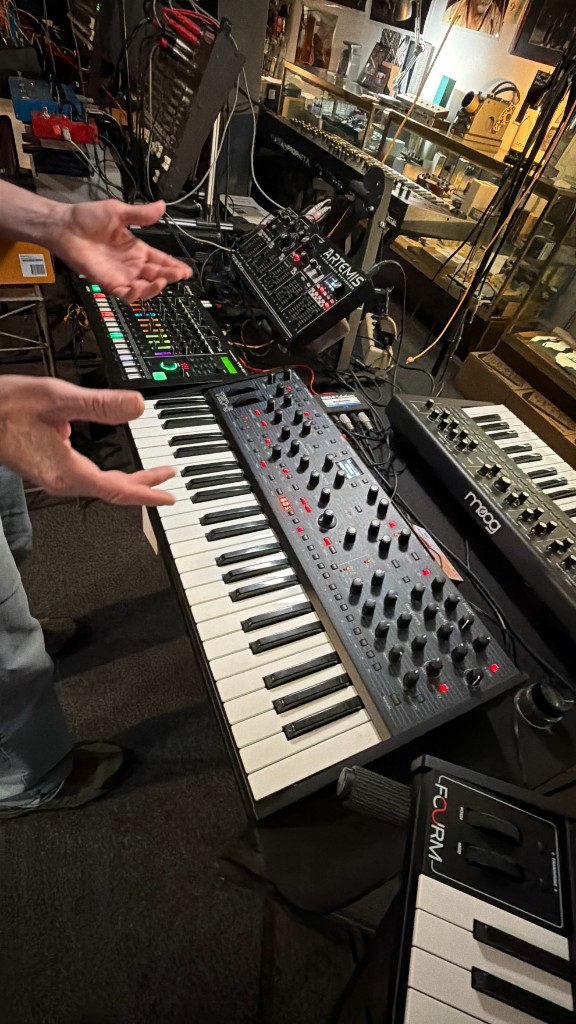
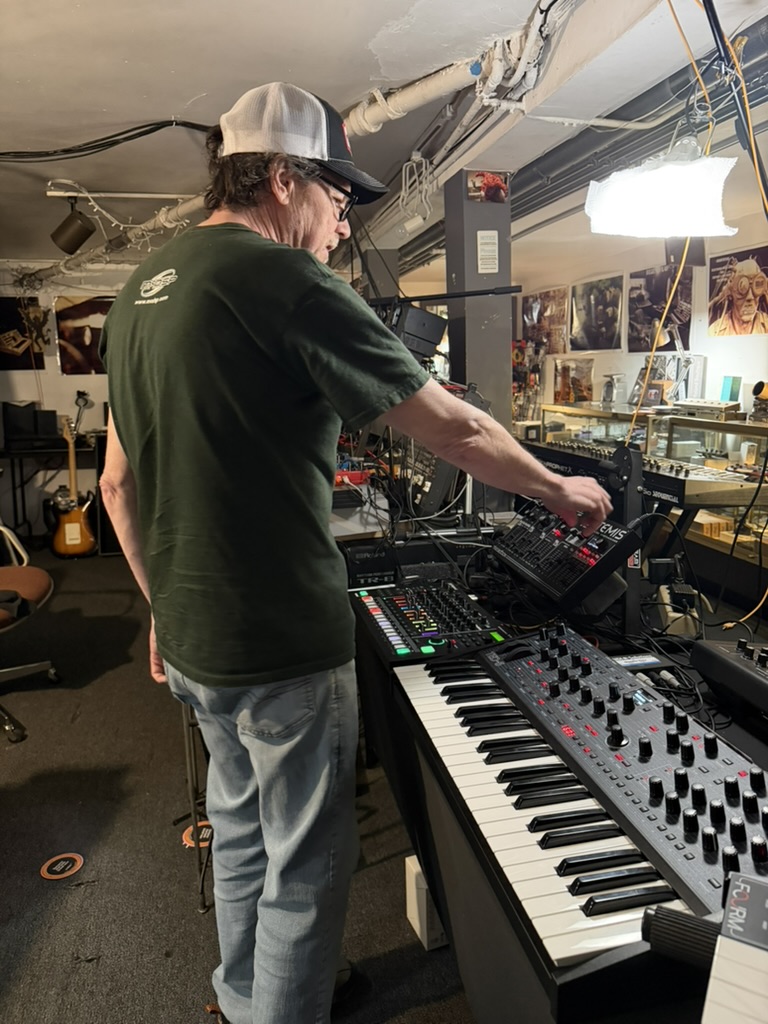
The space looked like what would happen if a lab, a museum, and a recording studio had a child and raised it in a basement. Low ceilings, exposed pipes, wires running overhead like vines. A single warm lamp doing most of the work. Keyboards stacked three deep along one wall: Moog, Oberheim, Sequential. On the other wall, a modular synthesizer rig the size of a small bookcase, with dozens of colored patch cables running between modules. Red, blue, yellow, green. It looked like a nervous system pulled out of something alive and pinned to the wall, still humming.
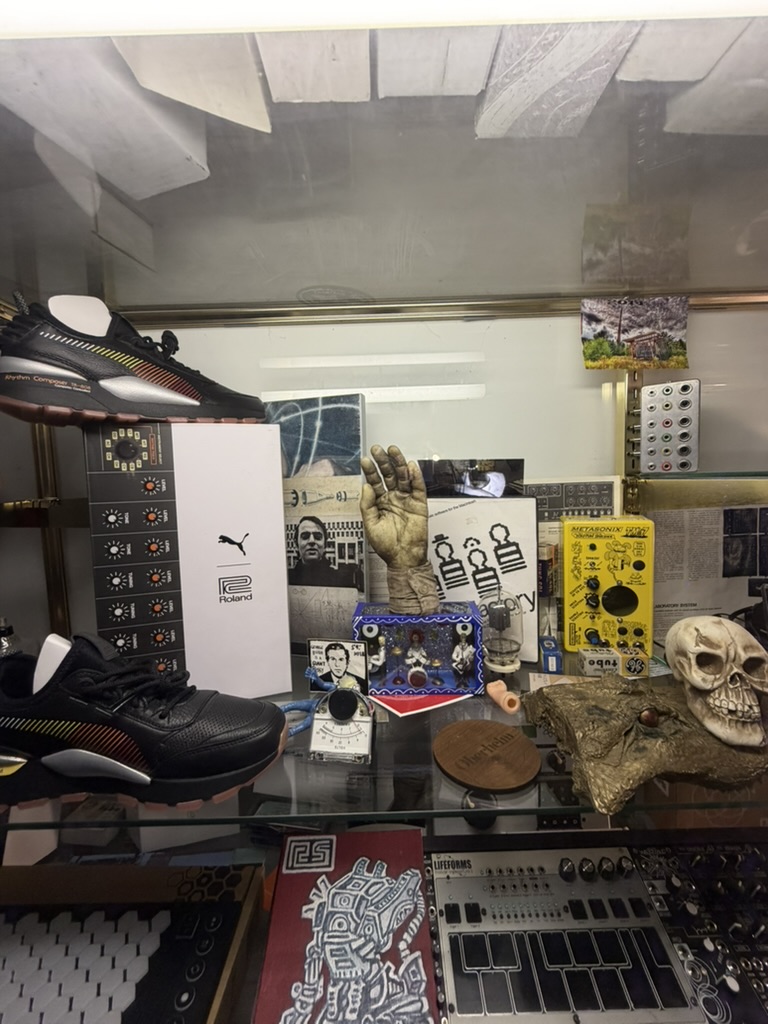
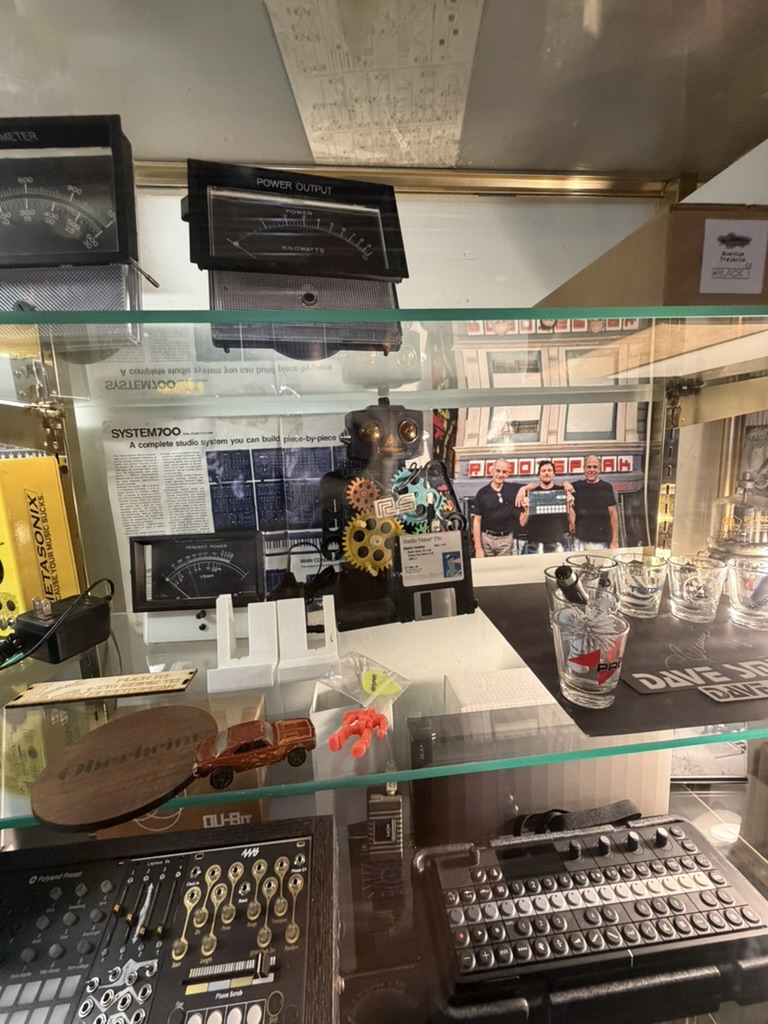
And then there were the glass display cases. This is where it stopped feeling like a store. A pair of Puma x Roland sneakers sat next to a plaster hand sat next to a skull sat next to vintage VU meters sat next to a toy robot with exposed gears sat next to what looked like a Keith Haring sketch. No price tags. No logic. A floppy disk. GE vacuum tubes. Shot glasses from somewhere. A man's entire curiosity arranged behind glass.
His name was Steve Taormina. Berklee-trained in music synthesis. Twenty-three years in this basement.
He specializes in analog synthesizers and drum machines. The kind from an era where every single sound had to be built by hand with circuit boards and capacitors. No software. No presets. No asking AI to generate a beat. Each machine was wired to produce a specific palette of sounds, and the musician's job was to find the music hiding inside the circuitry. He said it like someone describing a religion they'd built themselves.
I told him I was an amateur musician at best. That I knew nothing about electronic production. That I'd come because the shop had an unusual name and I was curious.
He didn't care. He turned a few knobs and started playing.
The rhythm built slowly. A low pulse first. Then a higher tone weaving through it. Then something percussive and dry, clicking like an insect. It layered itself. The sound was hypnotic. Not designed to fill a room but to quiet it. An om backed by EDM. I stood there and just listened.
He told me this is what he does. He hunts these machines down. Goes out and finds them wherever they still exist. “This one,” he said, pointing at something I couldn't name, “is the last one in the United States.” He pointed to another. “One of three in the world.”
Then the part that got me.
“I buy them to sell,” he said. “That's supposed to be the business. But I like them so much I can't let go. Eighty percent of what's in here isn't for sale. It's for me to play with.”
Eighty percent. I looked around the shop again. The modular rig with its colored cables. The keyboards. The glass cases with their skulls and sneakers and floppy disks. Eighty percent of this was his. Not inventory. Collection. Not a store. A life.
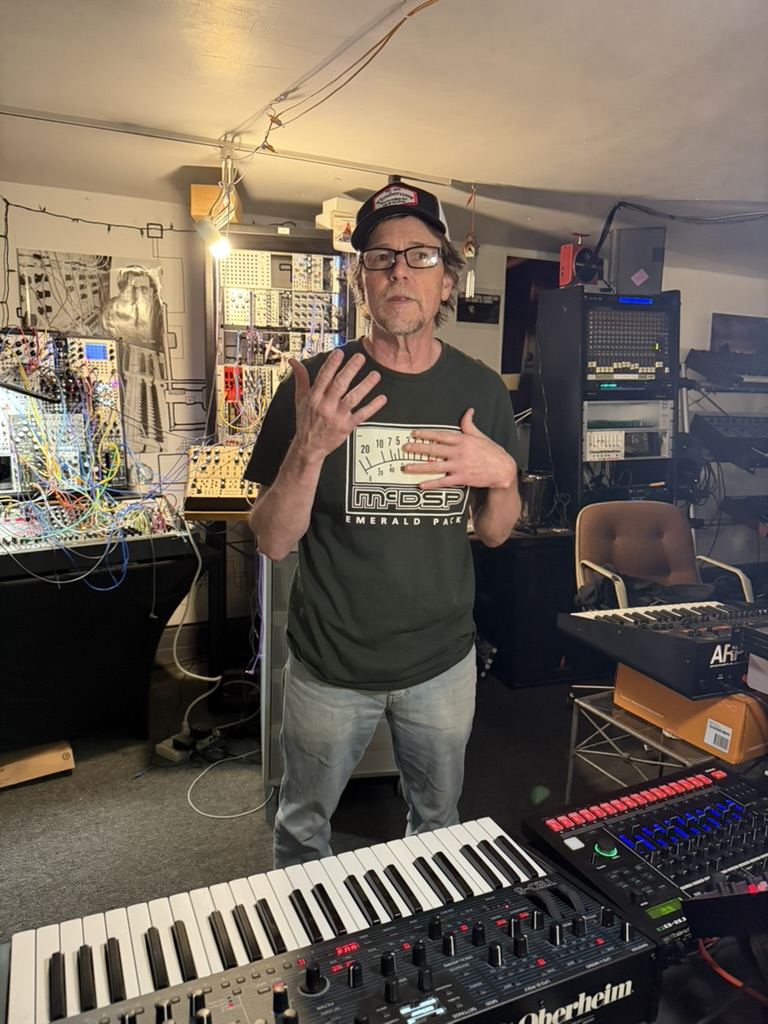
He looked at me and asked, completely straight: “Are you rich?”
I laughed. “No. I'm comfortable. I wouldn't call myself rich.”
“If you have rich friends, send them my way. I really need to sell something. Base price starts around three thousand.”
He said it the way someone might mention they should probably eat lunch at some point. A minor concession to the fact that a body needs food. He needed revenue the way he needed to sweep that sidewalk. Eventually. But not before playing.
Then he did something I wasn't expecting. He sat down and started what I can only call a performance. Not a sales demo. He built a track from nothing, turning knobs, layering sounds, adjusting frequencies with the kind of micro-precision that only comes from doing something ten thousand times. Twenty minutes. What came out sounded like the score of Stranger Things, except it was being composed in real time, three feet from me, by a man in a trucker cap and a faded t-shirt in a basement on Haight Street. When he finished, he looked up the way people look up from meditation. Slowly. Like he was re-entering a room he'd quietly left.
“I do twenty-minute tracks sometimes,” he said. “It's meditative for me.”
I believe him. I watched it happen.
Here's where I get stuck.
Somewhere in my head, the professional part of me was running calculations. Why isn't this guy doing curated workshops? He could charge real money for sessions. He could build a membership model, a Patreon, an online following. He's sitting on two decades of expertise in a discipline people pay thousands to enter. The business case writes itself.
But I watched him play, and the business case felt like the wrong language entirely. Like walking into a cathedral and asking about the revenue model.
I've thought about this since. Everyone knows the template. Someone talks about going to Goa and opening a bar. Someone moves to the mountains to write a book. I've spoken to people on both sides of that decision. The ones who did it, and the ones who thought about it for years and stayed. It's never as clean as it sounds. The people who chased it will tell you, if they're honest, that it's also lonely and uncertain and financially brutal. And the people who stayed will tell you, if they're honest, that they still wonder.
This guy wasn't performing the dream for me. He wasn't selling a lifestyle. He was playing music in a basement before sweeping his floor, and eighty percent of his livelihood wasn't for sale because he loved it too much to let go.
I don't know if that's wisdom or ruin. Genuinely. I walked out of there not knowing what to feel, and I've decided that's the honest answer, so I'm keeping it.
What I do know is this. Sitting in that basement, watching his hands move across machines built before I was born, listening to a rhythm that came from circuitry and intuition and twenty-odd years of obsessive attention to one thing, I felt something I don't feel often enough. Quiet. The kind of quiet that happens when you're near someone who has stopped performing and started doing. Not explaining the work. Not optimizing it. Not packaging it for anyone. Doing it.
We talk about passion constantly. We put it in LinkedIn bios and conference talks and pitch decks. Follow your curiosity. Find your purpose. It's mostly words. Then you walk down a flight of stairs on Haight Street and meet a man who chose the music over the broom, and you realize you've spent a lot of time around the word and not much time around the thing.
I walked out and the sunlight hit hard and Haight Street was loud and normal and full of people going somewhere. Inside, the rhythm was probably still going.
Eighty percent not for sale.
People
Steve Taormina
Berklee-trained synthesist. Owner of Robot Speak for twenty-three years. Bought machines to sell, kept eighty percent for himself.
Recommended
Robot Speak
wander589½ Haight Street, San Francisco. Open Wed-Sat. Half-subterranean synth shop. Go with no agenda.